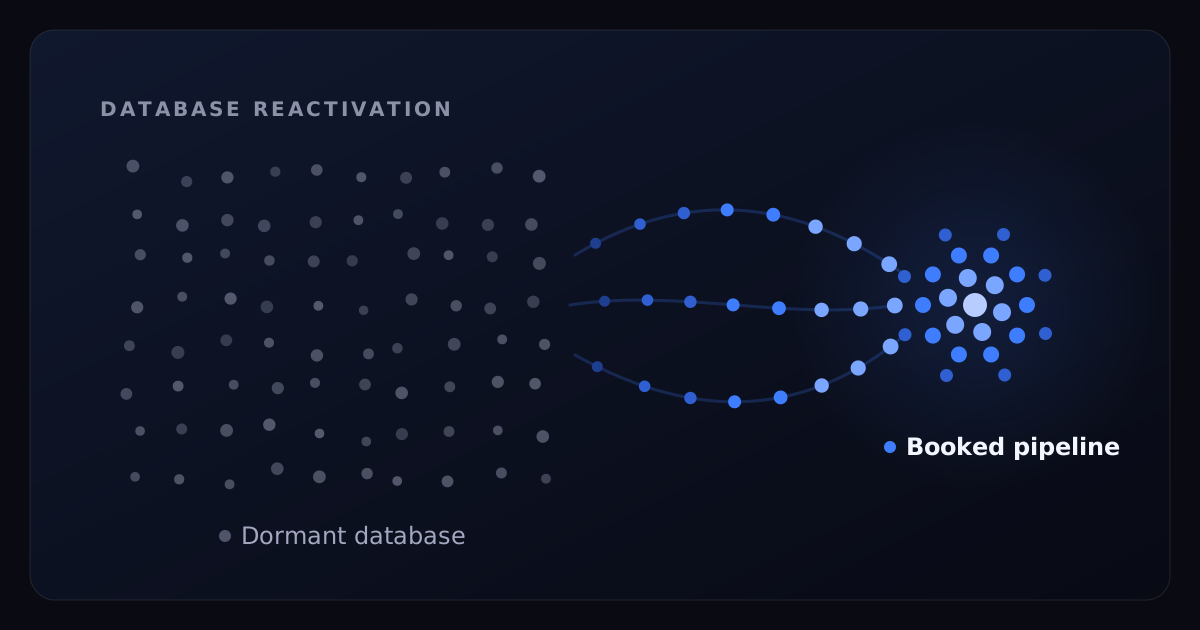
Open your CRM right now and count the contacts nobody has touched in six months. For most businesses that number runs into the thousands — and every one of them cost real money to acquire. Ad spend, content, events, referral fees, an SDR's time. Paid in full, filed away, forgotten.
A database reactivation campaign is how you collect on that investment. Here's the reframe that changes the math: those leads aren't dead — most were just mistimed. They had the problem but not the budget. The budget but not the urgency. The urgency but a champion who left. "No" in a sales database is almost always "not now" that nobody ever followed up on — because following up on ten thousand cold records manually is a job no human team will ever staff.
That's the job AiDA Awakens was built for. But whether you run it with us or build your own, the playbook below is the same.
- A meeting from your existing database costs only the outreach — the acquisition cost is sunk. Junk-A-Haulics cut lead cost 5x this way.
- Segment before you send: dormancy age, prior stage, and fit decide the message. Blasting the whole list is how sender reputations die.
- Replies from revived leads are perishable — answer in seconds or you spend the asset and skip the payoff.
- Consent still applies to old records: verify data, honor opt-outs and quiet hours, lead with the honest history.
The math of reactivation
Why start with the dormant list instead of buying more leads? Because the economics are lopsided in your favor.
Every lead in your CRM has a sunk acquisition cost — you already paid it, and it's gone whether or not you ever contact them again. So the marginal cost of a meeting from your dormant list is just the cost of the outreach itself. No new ad spend, no new lead purchases, no new landing pages.
- New leads: acquisition cost + outreach cost + the trust-building tax of being a total stranger.
- Dormant leads: outreach cost only — and they already know who you are.
This isn't hypothetical. Junk-A-Haulics had years of paid-for inquiries and past quotes sitting idle in their CRM while the ad budget kept chasing strangers. Reactivation on that existing database — segmented, personal, every reply answered instantly — produced meetings at 5x lower lead cost than acquiring new. Same pipeline, one-fifth the price, from an asset that had been depreciating on their books.
Run the sizing math on your own list: take everyone who fits your buyer and went quiet this year, assume conservatively that a few in every hundred reply and a fraction of those become meetings — on five thousand records, that arithmetic still yields dozens of live conversations at outreach cost alone. Rates vary by list age and industry; the shape of the result rarely does.
A second advantage doesn't show up in the cost math: speed. New-lead pipelines take months of audiences, creative, and list building; a reactivation campaign starts with a list that already exists, so the first conversations happen in days. When a quarter needs pipeline now, the dormant list is the fastest lever on the board.
Your dormant database is the only lead source you own outright, the only one that's already paid for, and usually the only one nobody is working.
How a database reactivation campaign actually works
The word "reactivation" makes operators flinch when they've seen the ugly version: a mass blast to the whole database, a spike in unsubscribes, a bruised sender reputation. That's not this. Here's the actual sequence.
1. Segment before you send
A dormant list isn't one audience — it's several, and they need different conversations. The system segments on three axes: recency (dark three months is not dark three years — more below), prior stage (a ghosted demo gets a very different message than a one-time guide download), and fit (some records were never your buyer; they get filtered, not messaged). Segmentation is what turns "a blast" into a hundred small, appropriate conversations.
2. Re-engage personally, across channels
Outreach goes out across SMS, email, voice, and — for B2B lists — LinkedIn, matched to what each segment responds to: a demo ghost reads an email from a name they recognize, while a one-time form fill often answers a short text first. And the messages reference the prior relationship honestly, because they can: "You spoke with our team last spring about X" lands completely differently than a cold pitch pretending you've never met. No fake "just circling back" from a rep who never existed. Honesty about the history is the unfair advantage a dormant list gives you — use it. The system watches what each segment answers and shifts weight accordingly; the goal is a reply, not a send count.
3. Answer replies in seconds
Reactivation campaigns produce replies fast, and a reply from a warmed-up lead is perishable. The same five-minute window that governs fresh inbound applies to a revived lead — if anything it's tighter, because you interrupted them; they weren't out shopping for you. The AI answers in seconds, qualifies the interest, handles the "remind me what you do" questions, and moves real interest toward a conversation. When it's time to meet, it offers real open times conversationally. No booking links, no homework.
4. Escalate the warmest by voice, route the hottest to reps
The most engaged responders get a voice AI follow-up — because for a lead that's leaning in, a call converts what a fourth email won't. And leads who are clearly ready to buy skip the queue entirely: they route straight to your reps with full context, so a human closes what the system surfaced.
Segmenting dormant leads: how old is too old?
Recency deserves its own table: dormancy age changes the message, the channel, and what to expect back. The expectations below are directional on purpose: exact response rates swing wildly with list quality and industry, and anyone quoting a universal percentage is selling something.
| Segment age | Approach | What to expect |
|---|---|---|
| Dark 30–90 days | Short, direct re-open that references the last interaction; three touches, fast cadence | The most responsive segment on the list — treat replies like fresh inbound |
| Dark 3–12 months | Multi-channel nurture that leads with what's changed: new offer, new proof, new pricing | Steady replies; timing does the work here, so persistence beats cleverness |
| Dark 1–2 years | Verify contact data first, then a value-first re-introduction on a lighter cadence | Fewer replies, but the ones that come are often real buying-window hits |
| Dark 2+ years | Verify hard, prune harder; one light re-permission pass | The smallest return — worth one clean pass before you retire the rest |
One rule spans all four rows: the gap between the youngest segment and the oldest is the difference between warm and cold — the fast segments get worked first and hardest. And "how old is too old" has a practical answer — old enough that verifying and pruning costs more than the conversations produced.
Why most reactivation attempts fail
If reactivation is such obvious money, why isn't everyone printing it? Because most attempts make one of three mistakes:
- Batch-and-blast to a decayed list. One generic message to everyone, including addresses that died two years ago. Contact data rots quietly — people change jobs, numbers churn — and the bounces and spam complaints do real damage to deliverability. The campaign concludes "our list is dead" when the truth is "our method was."
- No reply handling. The campaign generates responses and then nobody answers them for two days. A reactivated lead's interest has a half-life measured in hours. Sending without the capacity to converse is spending the asset and skipping the payoff.
- Treating it as a one-time event. A single quarterly "wake the dead" push touches everyone once and goes back to sleep. But leads go dormant continuously, and timing changes continuously — the lead who ignored you in April has a new boss and a new budget in September. Reactivation works as an always-on layer, not an annual campaign.
A fourth, quieter failure: hesitation — operators who won't put an AI in front of a database they spent years building. Fair instinct, solved problem: in draft-for-approval mode the system writes every reply in seconds, a human approves before anything sends, and the leash loosens as accuracy proves out. We've written up how human-in-the-loop controls work in practice.
Consent and compliance for SMS and voice re-engagement
Old records raise a question fresh inbound never does: are you still allowed to contact them? Treat it as a design constraint, not a legal footnote. Email is the forgiving end — honor every historical unsubscribe and keep the sunset rules above. Text and phone are stricter: message only records with a real prior business relationship or express consent, respect quiet hours, identify yourself honestly, and make opting out effortless — one reply, done. The practical details for text and phone are covered in AI calling vs. AI texting.
The convenient truth: compliance and performance point the same direction. "You asked us for a quote last spring" is both the safer message and the higher-converting one, and the records where you'd have to stretch to justify contact are the same ones that would drag reply rates down anyway. When in doubt, prune.
What this looks like in practice
An engagement starts with your existing database — exported, verified, segmented. Nothing new gets bought. Within days the first segments are live and the meetings land on your calendar, synced back to your CRM with full context. Most teams see live pipeline from a dormant list in under 30 days — the launch phase: train the AI on your history, build the segments, go live. Days 31–90 are the compounding phase: the always-on layer works new dormancy as it appears and sharpens with every conversation. The 90-day implementation plan walks through both phases step by step.
The reps' experience is the best part: they don't send anything, chase anything, or "circle back" on anything. They take meetings with people who already knew the company and just needed the right conversation at the right time.
And because the whole loop runs on infrastructure you own — your database, your sender accounts, your CRM — nothing about the asset leaves your hands. The list gets cleaner, the history gets richer, and every campaign makes the next one smarter. That's the opposite of renting leads: the value compounds on your side of the ledger.
Work what you own first
There's a reflex in growth planning that says pipeline problems get solved by buying more leads. Sometimes that's true. But it's an expensive first move when there's a warehouse of already-purchased, already-aware prospects sitting in your CRM earning nothing.
Before you spend another dollar acquiring strangers, put a system on the people you already paid to meet. The gold mine is already on your books. AiDA Awakens is the crew that works it.
Frequently asked questions
What is a database reactivation campaign?
A database reactivation campaign is a segmented, multi-channel outreach sequence sent to dormant contacts already in your CRM — people who inquired, took a quote, or went quiet — to restart conversations and book meetings. Because their acquisition cost is already sunk, you pay only for the outreach, to an audience that already knows who you are.
How much cheaper is reactivating old leads than buying new ones?
Substantially, because every lead in your CRM carries a sunk acquisition cost — a meeting from the dormant list costs only the outreach itself. When Junk-A-Haulics ran reactivation on their existing database, lead cost came in 5x lower than acquiring new. Your exact multiple depends on what you originally paid per lead, but the direction holds for almost every list.
How do you segment leads for reactivation?
Segment on three axes: dormancy age (30–90 days, 3–12 months, 1–2 years, 2+ years), prior stage (a demo ghost needs a different message than a one-time form fill), and fit (records that were never your buyer get filtered out, not messaged). Recent-dormant segments respond at many times the rate of years-old ones, so they get a fast, direct push while older segments get a verify-first, lighter-touch approach.
What channels work best for lead reactivation?
A coordinated sequence beats any single channel: a short text is the lowest-friction re-open (SMS open rates are widely reported around 98%), email carries the substance, voice converts the warmest responders, and LinkedIn adds a fourth door for B2B lists. Whatever a revived lead answers on, though, the reply has to come back in seconds — while their attention is still live.
How many touches should a reactivation sequence have?
In the sequences we run, six to eight touches over roughly three weeks is typical — enough persistence to catch attention without hammering a list you want to keep healthy. The non-negotiable rule: stop the sequence instantly on any reply and let the conversation take over. A revived lead goes cold just as fast as a fresh one when the answer arrives tomorrow instead of now.